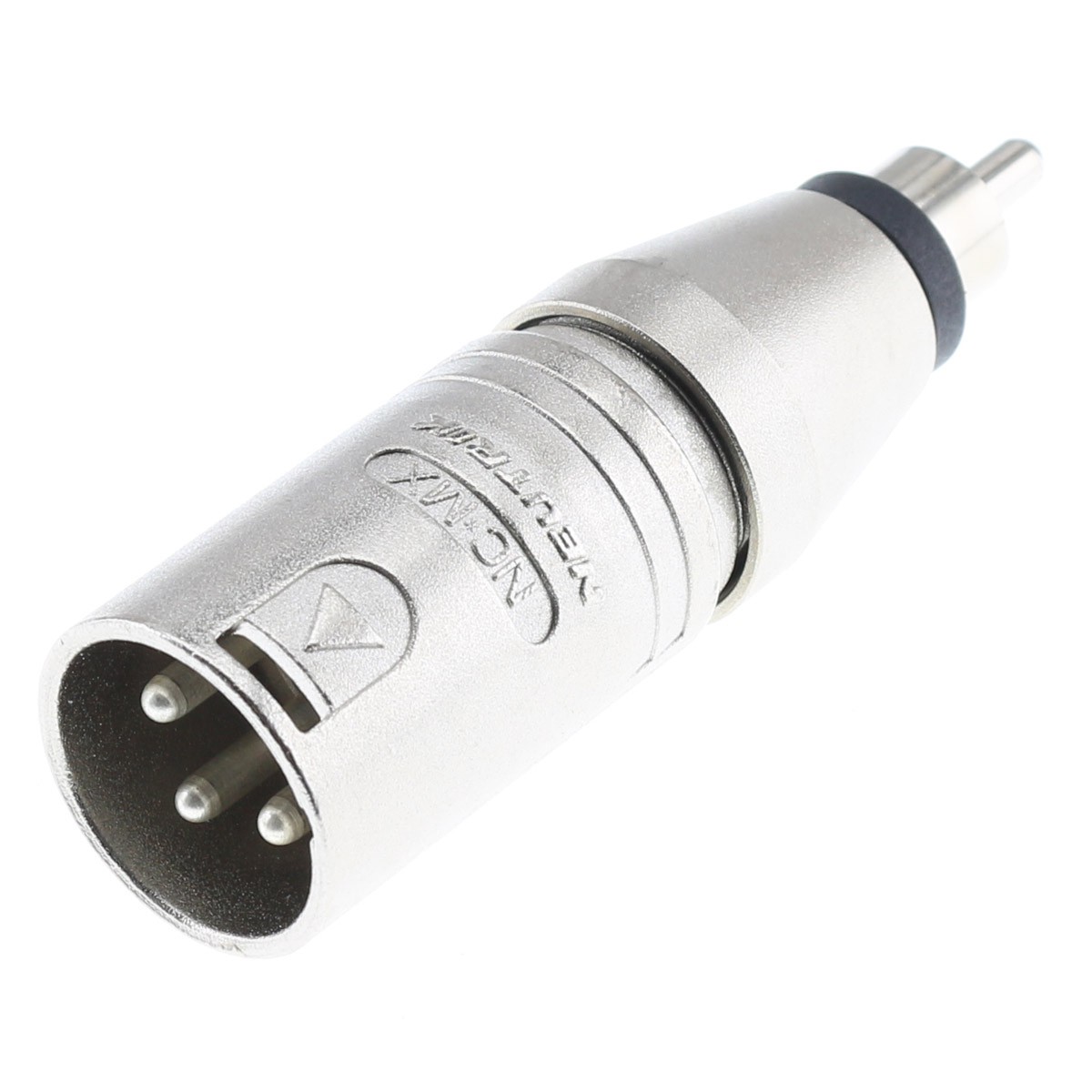
@Alan March Hey Alan, I was reading an amplifier review on futureaudiophile.com & someone had mentioned in the comments the following about an apparent "XLR Pin 1" problem with RCA-M to XLR-M adapter cables, I gather there isn't a reason to be concerned about this as long as it's wired correctly as per Bruno Putzeys' recommendation?
"The so called “pin 1 problem.”
Most RCA to XLR adapters and pre-made cables will short pins 1 and 3, instead of utilizing a parallel RC network (e.g., 0.1uF, 100Ω) in series between the RCA collar and XLR pin 3 to help maintain the balanced input common mode current and impedance.
Another option with an RCA (upstream) to XLR (downstream) balanced cable would be to connect the shield and inverted leg (-) to the RCA collar then wire accordingly:
• RCA center pin wire (+) to XLR pin 2 (+)
• RCA collar inverted wire (-) to XLR pin 3 (-)
• RCA collar shield connection “telescopes” to the XLR but does not connect.
If there is hum, then insert the RC network.
The above opens up what could be a lengthy discussion about “true” balanced circuits via differential inputs, symmetrical topologies, and floating inputs.
If the amp has balanced inputs, then balanced connections throughout the system will produce a better outcome."
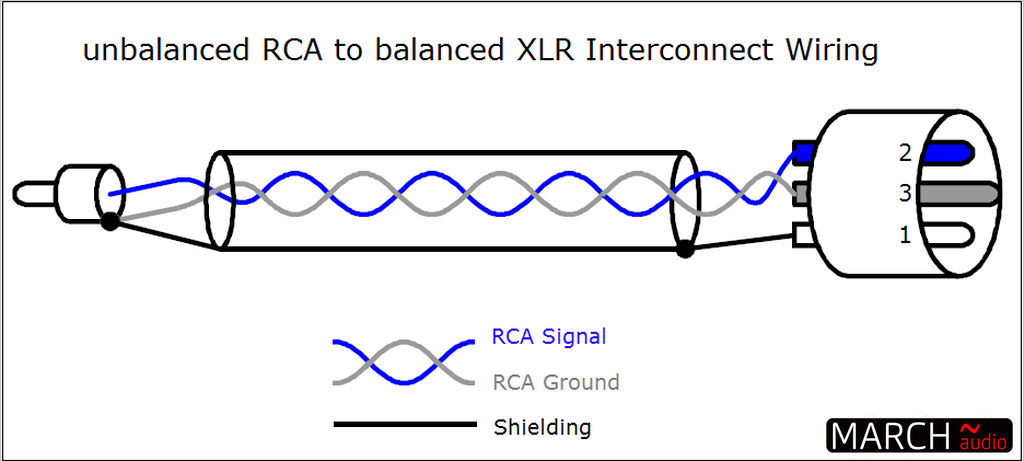
Just in case anyone is unsure, this is how a RCA to XLR cable should be wired, using shielded twisted pair microphone cable.
The principle is that with the shield connected to the RCA low at the far source end, the ground currents (noise) harmlessly flow in the shield and into the chassis of the amp and NOT in the signal low.
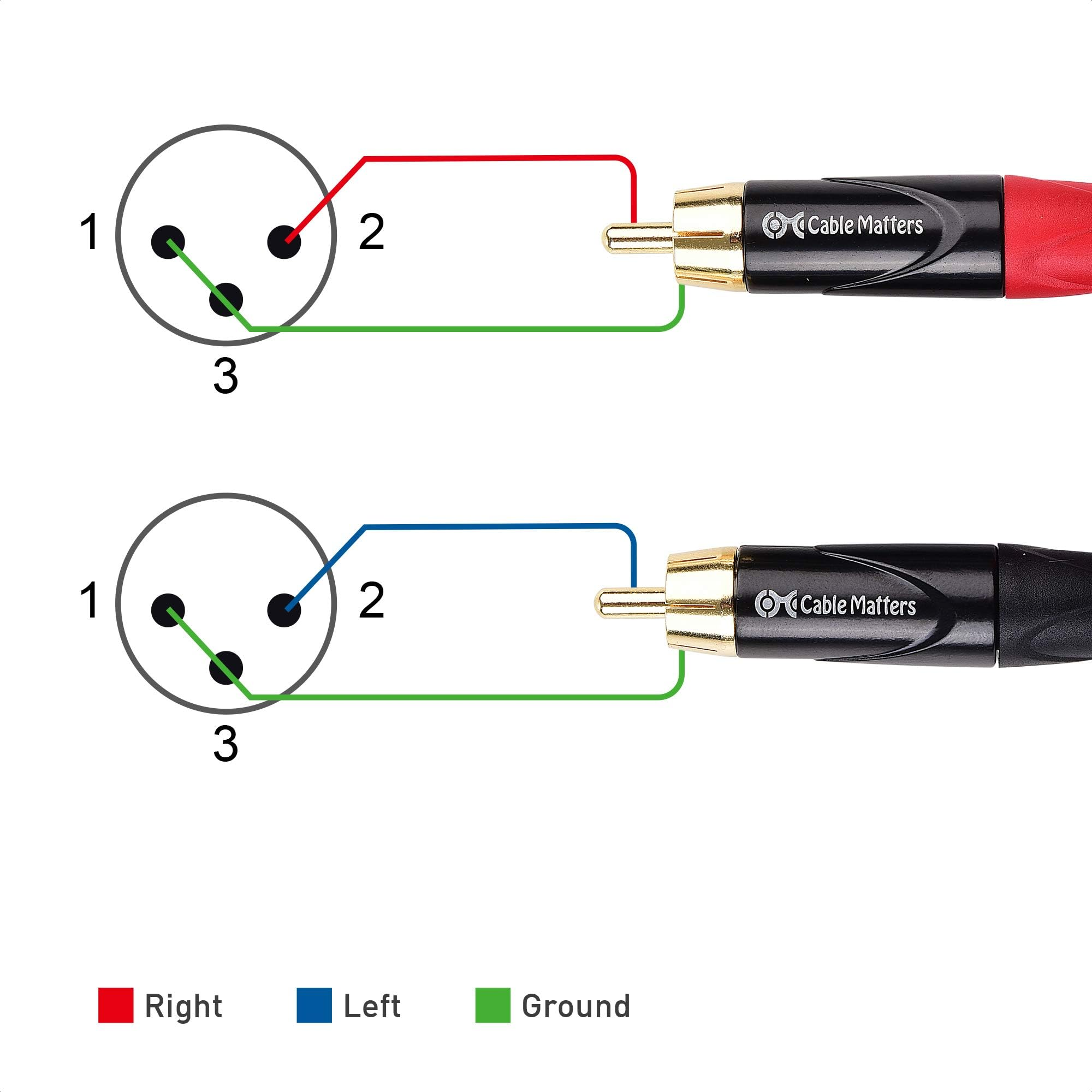
Do NOT use this type of adaptor with a standard coaxial RCA cable as the ground (noise) currents will still be flowing in the RCA cable shield (low signal conductor).
Below with standard RCA coax cable is absolutely the *WRONG* way to wire.
SmartOne_2000wrote:
Does a correctly wired RCA-to-XLR wire or connector reap the benefits of a truely balanced cable, i.e. suppression of common mode noise?
Not entirely, the 2 legs are different, but it will help in that respect to a degree. However the main benefit is to break the ground loop problem.
Alan Marchwrote:
Just in case anyone is unsure, this is how a RCA to XLR cable should be wired, using shielded twisted pair microphone cable.
The principle is that with the shield connected to the RCA low at the far source end, the ground currents (noise) harmlessly flow in the shield and into the chassis of the amp and NOT in the signal low.
Do NOT use this type of adaptor with a standard coaxial RCA cable as the ground (noise) currents will still be flowing in the RCA cable shield (low signal conductor).
Below with standard RCA coax cable is absolutely the *WRONG* way to wire.
If wired correctly internally they would be OK to use.
The whole point is to make the shield connection to the RCA low at the far, source end. To use shielded twusted pair cable and not usual coaxial RCA cable.
However, as you may not know how they are wired inside, the advice still stands. Avoid using "tube" style converters.