Alan Marchwrote:
...
He also banned another speaker reviewer from the site, Erin Hardison. Erin was providing far more useful, accurate and scientifically oriented data and informed opinions. Erins site is a source of genuinely accurate and objective information. My recommendation is if you want to know what speakers are really like, go there and not to ASR. You will come out far better informed than from ASR. Erins methods actually follow the science and the tests are far more comprehensive.
...
…yeah…that was a bit depressing to see, and somewhat bizarre to behold.
Erin’s work makes it easy to consider it worthy of my patreon support.
Is there a recommended torque setting for Lars’ purifi woofers?
I saw the tubular captive screw plugs that the capture the screws.They are probably a lot easier than using a threaded insert glued into the wood with an internal machine thread for the screws. But the later always seems bomb proof.
What are you thoughts on the fellow’s zip tying the cables to the dowel?
(It seemed like a decent idea at a glance.)
Could those ETI Kryo connectors be inserted with some urethane style washers to “Mind the Gap” as the Brits like to say?
I am back in a bit over a fortnight, if we want to talk about moving forwards on some speakers.
Holmzwrote:
…yeah…that was a bit depressing to see, and somewhat bizarre to behold.
Erin’s work makes it easy to consider it worthy of my patreon support.
Is there a recommended torque setting for Lars’ purifi woofers?
I saw the tubular captive screw plugs that the capture the screws.They are probably a lot easier than using a threaded insert glued into the wood with an internal machine thread for the screws. But the later always seems bomb proof.
What are you thoughts on the fellow’s zip tying the cables to the dowel?
(It seemed like a decent idea at a glance.)
Could those ETI Kryo connectors be inserted with some urethane style washers to “Mind the Gap” as the Brits like to say?
I am back in a bit over a fortnight, if we want to talk about moving forwards on some speakers.
Amir has an agenda and a massive problem with me because I had the audacity to take him to task on his methods and lack of scientific rigour. He and his minion moderator BD Woody are deleting comments in the thread that contradict a certain narrative. They have even deleted comments derived from Lars Risbo, the driver designer, because they confirm my position.
Amir has a massive problem with Erin because Erin is doing a so much better and professional job of speaker reviews. He really does know what he is talking about. Unlike Amir who has zero speaker design experience or understanding. Thats why Erin got banned, he is competition to Amir. he makes Amir look bad. If you know anything about Amir you realise he is a massive egotist and narcissist who can never be wrong.
Note how Erin has engaged and interviewed many industry luminaries? No industry professionals will go near Amir.
So dont think for one second that Amir does not have an agenda, or that he is being impartial or scientific. I wouldnt give him any Patreon money. He is a millionaire. He does ASR to support his ego. Give the money to Erin, he knows what he is doing, has integrity and produces reviews that are far more informed with far more technical information and informed commentary.
Just post a link to this thread in the ASR thread. It would be interesting to see if it stays there very long. Im very happy to discuss the issue with ASR forum members if they want to post here.
Basically the reviewer lied about our cabling. We install it in the corner of the cabinet tucked securely behind the damping material thats stuck to the walls. Its then covered with the fibre fill material. It cant vibrate, it cant come loose, it cant flop around. He removed the fibre fill and pulled the wiring out to make it look bad. What can I say?
His cabling mod was pointless. Its clear from this, his unnecessary attempts to modify the tweeter and uninformed attempts to put more fill material in the cabinet, that he is just an amateur "tinkerer/tweaker". Full of ideas, empty of knowledge.
Take a long think about reasons we use the rubber well nuts and not the old fashioned metal captive types.. 😉
Due to the depth of the cabinet wall it makes it difficult to directly use the kryo sockets as they are not long enough. A much more secure mounting is achieved by mounting them in the metal plate rather than into the wood. BTW the metal plate also has sealant applied to its rear to make an air tight seal, so the holes in the cabinet are not an issue. We just screwed up by forgetting to apply the sealant to the end of the post connector in this particular instance. That wont happen again 😉
Yep, no problem. We are overwhelmed with orders at the moment, but Im sure I can find time to chat 🙂
Alan Marchwrote:
To be clear the problem this would cause is not something you would hear playing music, but it was picked up by the reviewer as he applied a very high level low frequency sine tone. Something that would never happen in real world use.
I heard that sample in his room. Af first I found the leakage of the binding post before he found it. While listening bass heavy music a little loud (Find myself in you - B McKnight, Limit to your love - James Blake, etc),
I heard noise like turbulance noise, shhh…shhh..
Maybe the level is about 90dB SPL dBC. But the peak factor will be at least 10dB more than that.
He generated sine tone to check out the leakage is still exist. It could heard at music to, not only at low frequency sine tone.
Jason Kwrote:
I heard that sample in his room. Af first I found the leakage of the binding post before he found it. While listening bass heavy music a little loud (Find myself in you - B McKnight, Limit to your love - James Blake, etc),
I heard noise like turbulance noise, shhh…shhh..
Maybe the level is about 90dB SPL dBC. But the peak factor will be at least 10dB more than that.
He generated sine tone to check out the leakage is still exist. It could heard at music to, not only at low frequency sine tone.
Fair enough, I can only take your word for it, but that is very loud. If an SPL meter is reading 90dB with music, even with fast averaging, the peak will be a fair bit more than 10dB higher. I only ever saw it being demonstrated with a sine.
Anyway, we accepted this as a build and QC issue and compensated the owner for our error which he accepted.
The rest of it however is nonsense. The reviewer is contradicting the driver designer Lars Risbo, the evidence that shows the resonance in *ALL* other implementations of this driver, and drawing all sorts of erroneous conclusions.
He is still persisting in trying to test for vibration with a microphone without the driver mounted in a baffle! He needs to accept he is not competent to do these sorts of tests or draw conclusions from them.
He also tried to portray the wiring in a totally misleading way. Its just dishonest, so its impossible for me to believe what he says.
Also, now I find out he dismantled and modified the tweeter, along with his other incompetent modifications.
Am I expected to honour the warranty on this product after he has damaged it? If I were the owner I would be extremely unhappy with his modifications.
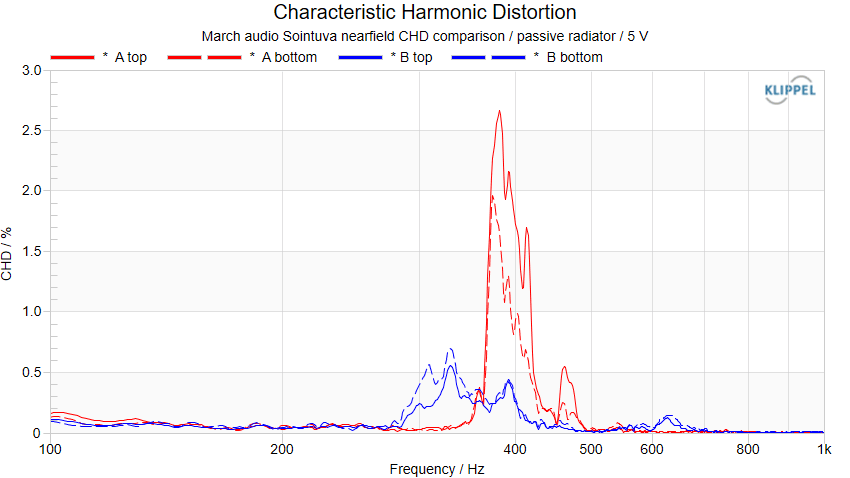
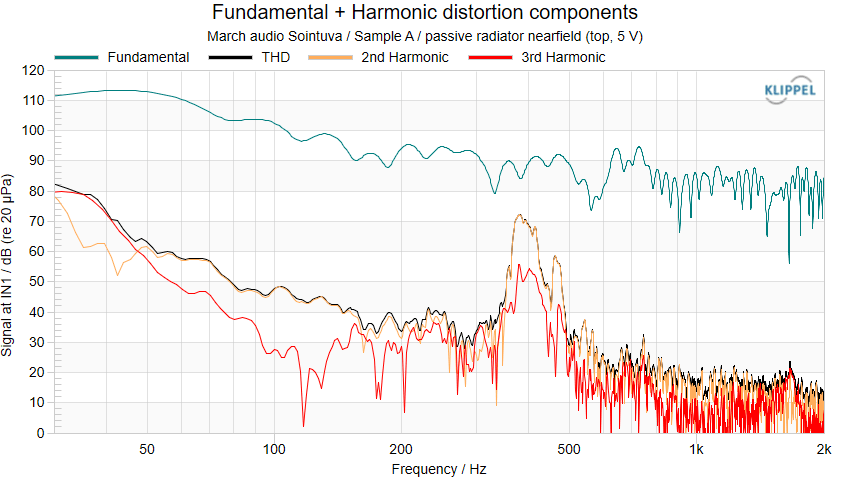
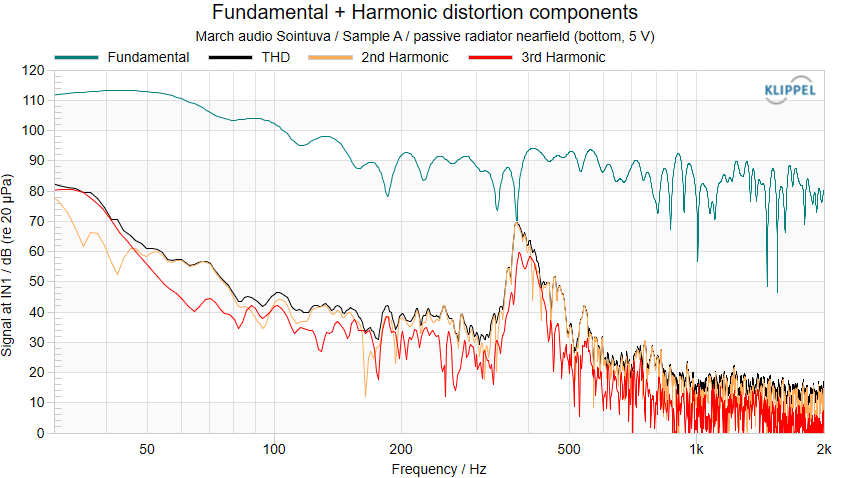
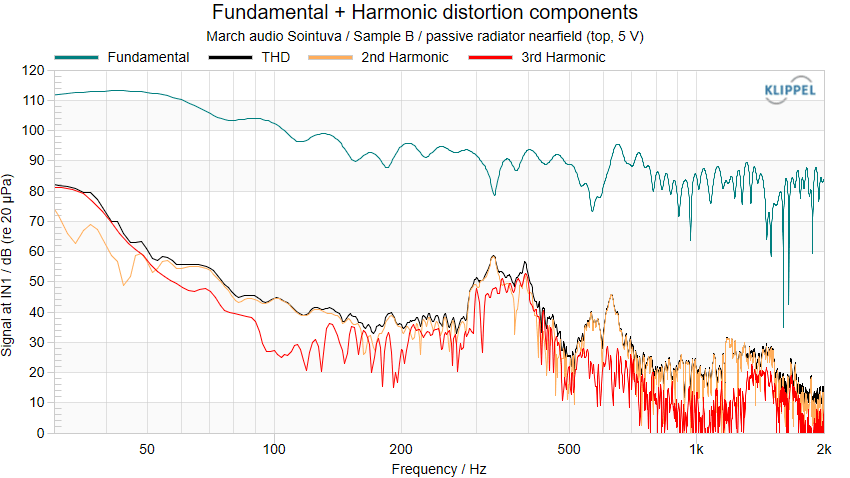
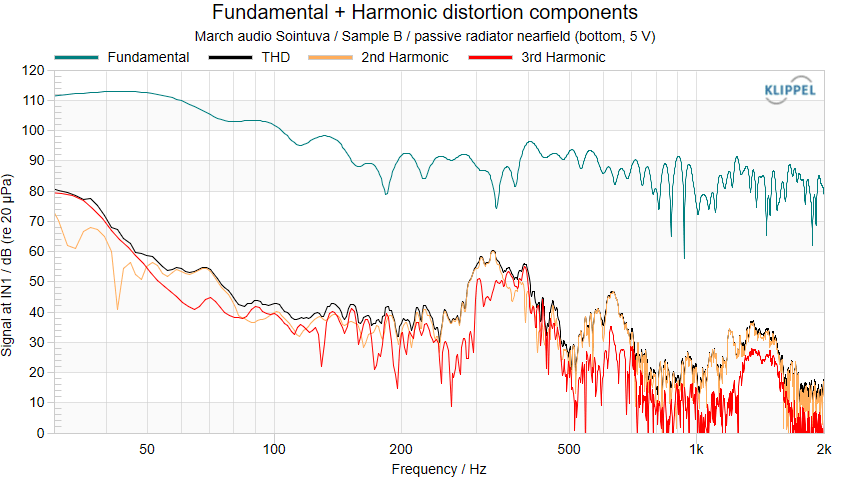
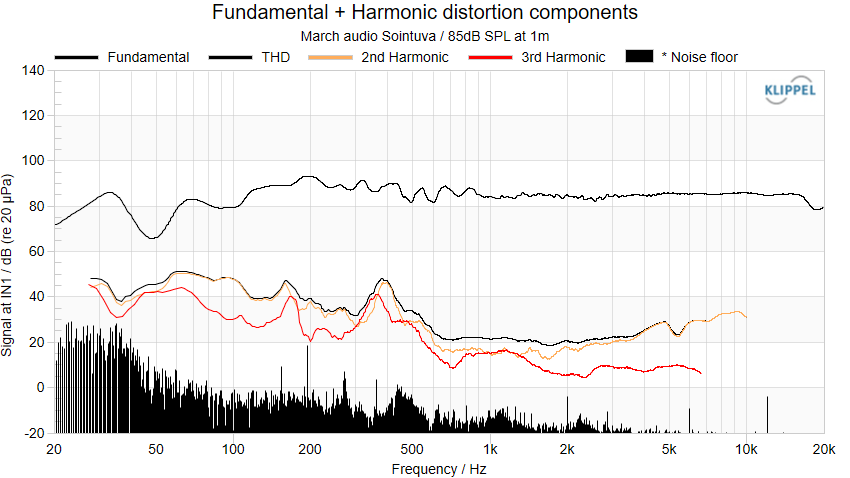
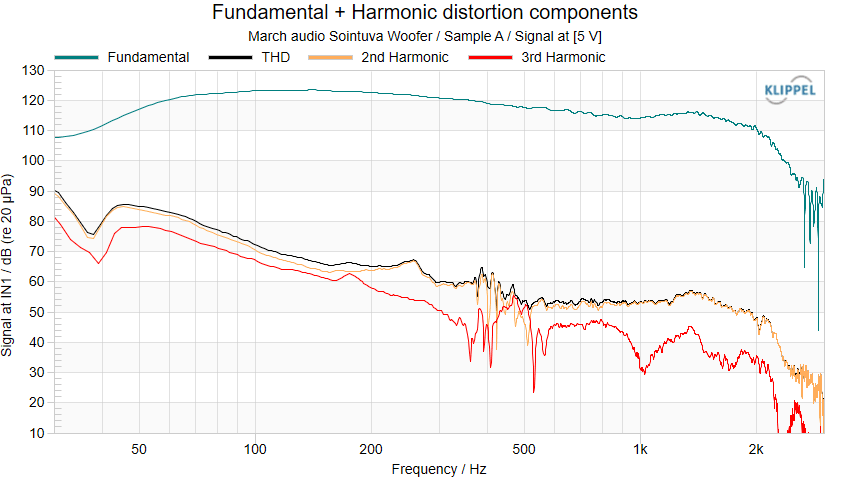
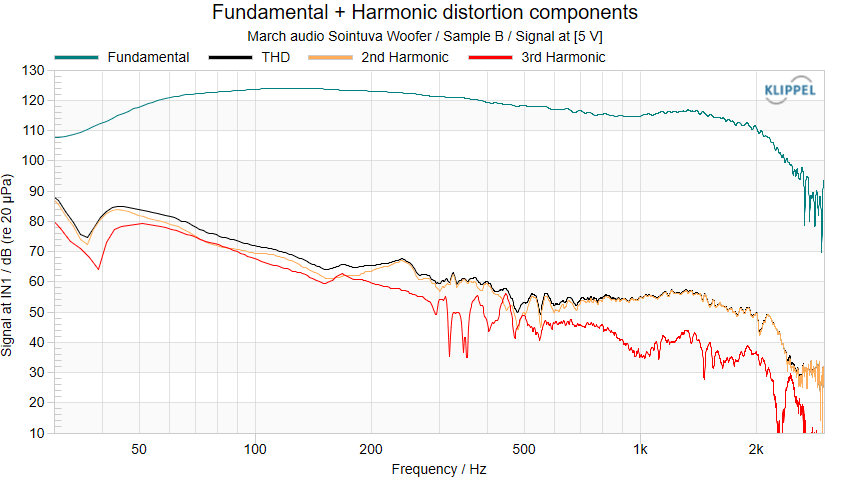
And these are distortion responses of 2 samples.
It was measured at nearfield of PR.
I know you said that the distortion is not caused by PR,
it maybe just leaked through PR?
but why they are different? Do we have to assume that level of difference is normal for Sointuva WG? Both of them were measured before disassembly.
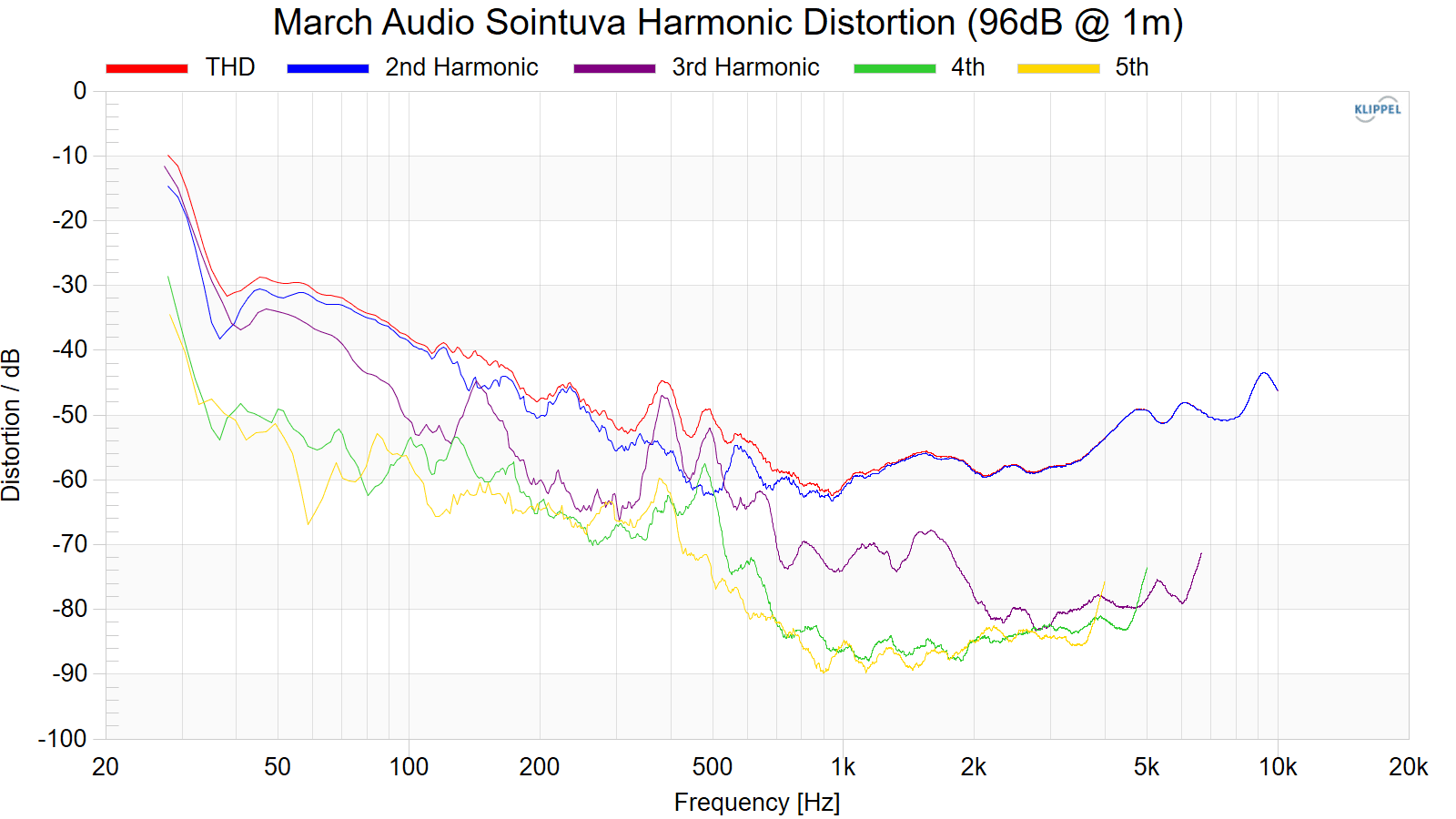
And, Lars Risbo said that around 400Hz distortion is caused by magnet-frame resonance.
But why they aren’t showed in many of driver measurement of Purifi’s?
And it should be clear what number of order of harmonics should be occured by resonance and the level too.
In Erin's review, 3rd HD is dominant. But the 2 sample showed that 2nd HD is dominant. (also 3rd exist.)
Would you please let us know about more specific information of Purifi's magnet - frame resonance?
Alan Marchwrote:
Fair enough, I can only take your word for it, but that is pretty loud. If an SPL meter is reading 90dB the peak will be a fair bit more than 10dB higher. I only ever saw it being demonstrated with a sine.
Yeah. I can understand your point of view.
I just wanted to correct your understanding about that noise.
To some extent, I think you should thank him for letting you know that problem he emailed you in advance via your customer. Anyway it is glad to be fixed easily.
And.. though for saying that 90dB SPL is too loud, I think many of people will also want to listen bass heavy music loud with Purifi driver speaker.
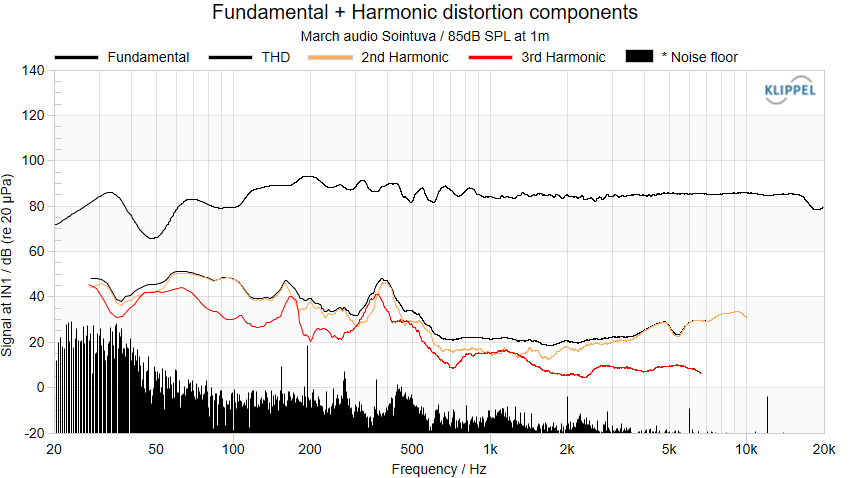
And these are distortion responses of 2 samples.
It was measured at nearfield of PR.
I know you said that the distortion is not caused by PR,
it maybe just leaked through PR?
but why they are different? Do we have to assume that level of difference is normal for Sointuva WG? Both of them were measured before disassembly.
And, Lars Risbo said that around 400Hz distortion is caused by magnet-frame resonance.
But why they aren’t showed in many of driver measurement of Purifi’s?
And it should be clear what number of order of harmonics should be occured by resonance and the level too.
In Erin's review, 3rd HD is dominant. But the 2 sample showed that 2nd HD is dominant. (also 3rd exist.)
Would you please let us know about more specific information of Purifi's magnet - frame resonance?
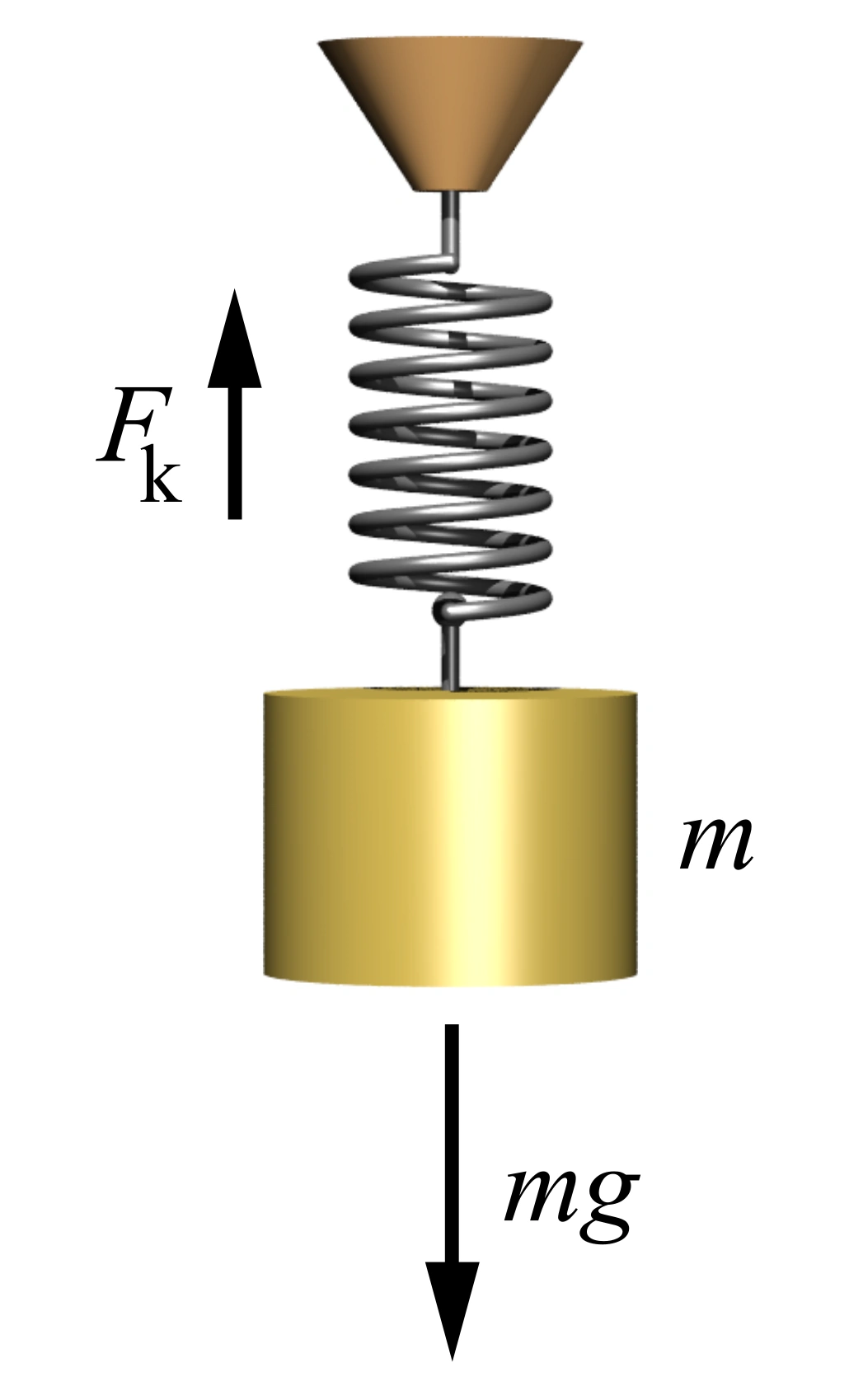
Well, as Lars points out in his comments above, this is an inherent problem of all speaker drivers to a lesser or greater degree. The magnet/motor and frame create a mass/spring oscillator.
The mounting of the driver directly affect the way the mass / spring behaves and how it damps the oscillation.
Its emphasised in the Purifi because of its very high MMS and strong motor. It also sticks out because its a generally very low distortion driver.
You will note the reduced level, but more spread out response of sample B. This is due to a more compliant interface between the driver frame and the cabinet. Sample A is less compliant and stiffer, hence higher "Q" response. They both left here very similar, but something obviously changed with sample A. With what I have witnessed of the reviewers behaviour and his "fiddling/tweaking/modifications" , I am not inclined to believe him that nothing was touched.
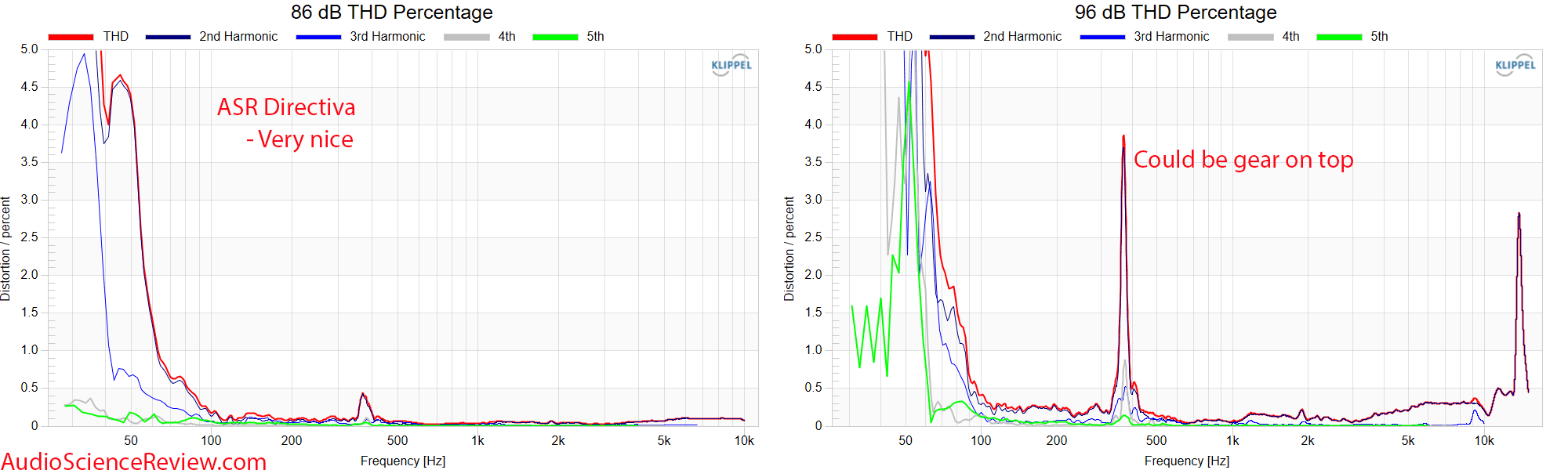
Ultimately you get to a situation like in the ASR directiva. If its a very tight stiff interface the response gets extremely pronounced and sharp. High Q.
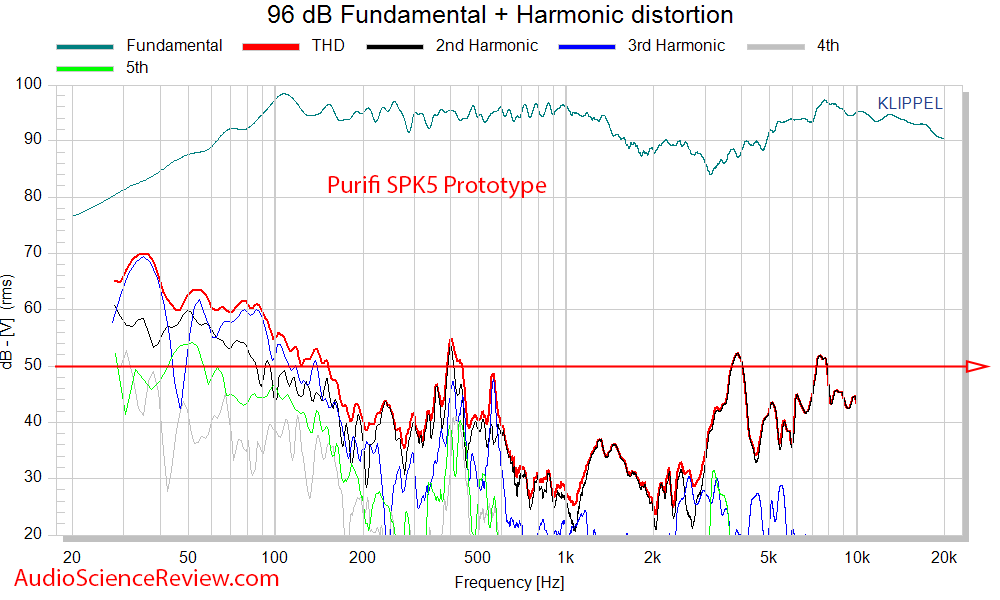
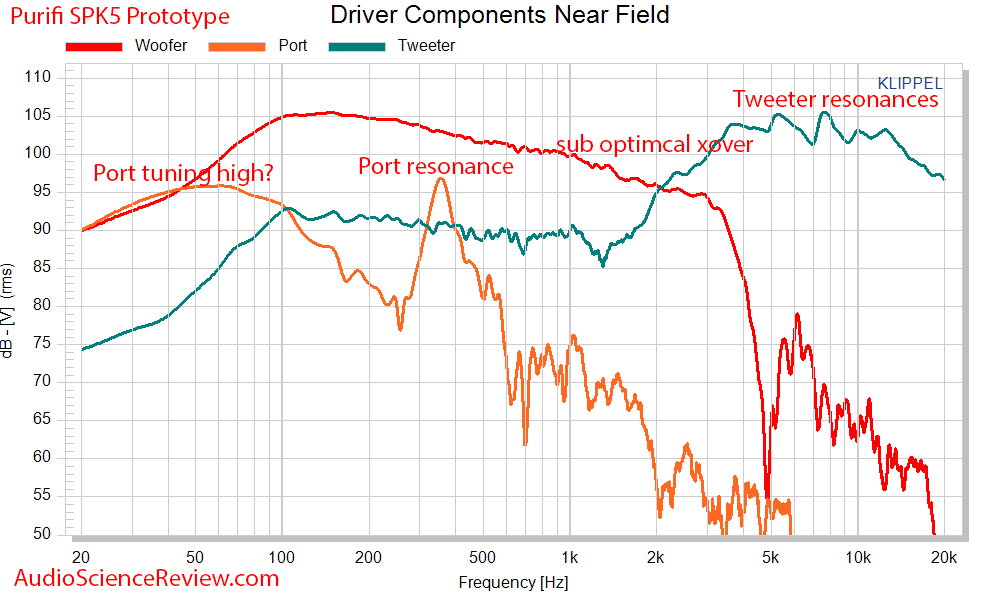
You can also see it in Amirs test of the SPK5
You can see below how he misinterprets this as a port resonance when performing near field measurements
So, yes the vibration created by the resonance is going to couple into the cabinet and be visible through ports or passive radiators.
As to why this doesnt show in the Purifi driver data, I simply suspect its due to the type of baffle they tested it on and how it was mounted. I dont think this is misleading, as Im am confident you will find many/most drivers show additional resonance when actually mounted in real world speaker cabinets as opposed to their test data.
I have personally discussed all of this with Lars, Bruno and Claus. Its not a huge problem when as a designer you understand the mechanisms, you can mitigate it down to very low levels, and we have.
Lets get real about this. The distortion the reviewer found is only at about 0.6% !!!!!!! Thats inaudible in music, and even with a sine tone difficult.
We dont hide the issue, its shown in the measurements on the product page We show -46db / 0.5%
However we agreed with Purifi a better way to mitigate this issue. It can be improved further, but Im not going to discuss how 😉 I am sure you can understand why.
Alan Marchwrote:
You will note the reduced level, but more spread out response of sample B. This is due to a more compliant interface between the driver frame and the cabinet. Sample A is less compliant and stiffer, hence higher "Q" response. They both left here very similar, but something obviously changed with sample A. With what I have witnessed of the reviewers behaviour and his "fiddling/tweaking/modifications" , I am not inclined to believe him that nothing was touched.
Thank you for detail answer.
I have to let to you know what I know.
I’ve been saw the process of measurements.
The two sample data was measured before modification.
This is the first measured data of sample A.
And what I upload is measured to compare both of samples.
If you take my word to be true, how can it be explained the difference?
Jason Kwrote:
Thank you for detail answer.
I have to let to you know what I know.
I’ve been saw the process of measurements.
The two sample data was measured before modification.
This is the first measured data of sample A.
And what I upload is measured to compare both of samples.
If you take my word to be true, how can it be explained the difference?
Well I have explained the mechanisms involved and of course there is going to be some variation between individual speakers. They are mechanical devices.
Something changed, but you are not going to lead me into making the statement you want. As I said, its very difficult to trust any statement with what I have seen over the past few days.
Alan Marchwrote:
Hang on a minute, lets look at the plots of speaker A and Speaker B
What massive difference is seen?
Can you show the difference at 1m?
That was nearfield measurement of woofer. In front of the woofer 1cm. They looks clean enough. But when the reviewer measured in front of PR, the problem was showed like 1M measurement.