
Notifications
Clear all
Power Amplifiers
114
Posts
7
Users
92
Reactions
24 K
Views

@Alan March A P482 customer recently posted over at StereoNet the following,
"Received a P482 today from March. 8hrs into things and I like what I'm hearing. Using a Supratek Cab 6SN7 pre with Harbeth SHL5 30th Annaversary's.
Great impact, good bass resolve, clean mids, highs are just a tad soft compared to Krell class A but nothing interconnects can't address and who knows how thing pan out 100hrs further down the road. It has nice textures and an ear to ear 180deg stage that images beautifully. It's front to back placement of vocals in my book are bang on! Job very well done March.
These things draw very little at idle so while its in the system it's staying on."
The same P482 customer from another post "I have the P482 and can vouch its a good little amp. I bought one as a summer amp instead of running class A which is now reserved for winter.
Was it worth their asking price, yes. I have absolutely no issue with its highs. Man, its quiet, quietest amp I've heard
For me it doesnt have the last bit of resolve in its stage.. it doesn't have the depth of a Krell KSA150 which was 3x the P482s price ($10k) in the 1980s.. bit unfair.
I'm driving the P482 with 6SN7 tubes... it does a pretty good job."
I was just curious how can interconnects improve the clarity in the treble region? I have no complaints really with the P482's "sound signature", I thought the whole point of Purifi was to be fairly neutral & not colour the sound in any particular way?
I haven't had any issues with my P482 & P481 amps except for the one time when I hooked up my P482 & it exhibited an extremely loud thump upon powering on when I first received it, it wasn't a very nice Christmas day surprise, I thought it had done damage to my Klipsch RF-7 IIIs' Compression Drivers but thankfully that doesn't appear to be the case.
Posted : 05/06/2025 4:01 pm

Topic starter
If interconnect cables are significantly changing the sound then they will have "unusual" technical parameters. Most of the time its simply expectation bias when people are hearing more than the most subtle of differences.
I would suggest the most likely culprit for highs sounding soft will be the Harbeths. They have a slightly low HF response. It doesnt look like a lot but spread over that wide range it has an impact. Especially with that bass boost.
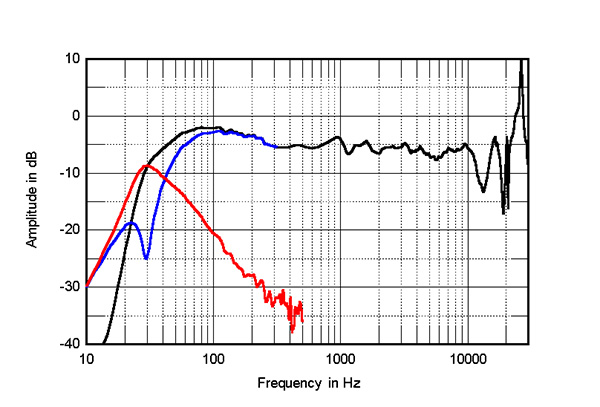
Also, the tube pre may well be impacting the sound.
We have a lot of customers that have dumped their uber expensive class A behemoth amps for our amps and not missed the former one bit.
Posted : 05/06/2025 6:35 pm
bobbyjziino and FNQ reacted
@Alan March Hi Alan, I came across this BobWire XLR1 automatic XLR Balanced selector/switcher product https://www.bobwireaudio.com/xlr1 , it was reviewed favourably over at ASR & was wondering if you're familiar with such a product?
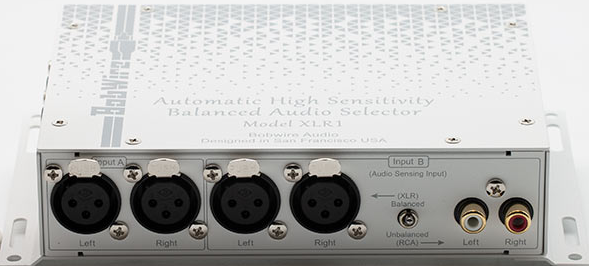
I was thinking of utilising it in between my Denon X8500H AVR & P482 amp, it helps get around the inherent limitations when going with RCA to XLR adapter cables concerning the 6dB loss with Single Ended RCA outputs to XLR inputs.
The BobWire manufacturer (who is a former senior engineer for Parasound) had this to say about the ineffectiveness of RCA to XLR adapter cables,
"An RCA to XLR cable (adapter) will only be using a single "leg"(signal) of the balanced XLR cable. The XLR cable is intended to carry 2 "legs"(signals), each out of phase from each other. The use of 2 out of phase audio signals allows the noise picked up along the cable to be removed(rejected) at the end, inside the amplifier. This is called CMR (common mode rejection) and is the primary reason XLR/balanced connections are used.
If you used the RCA to XLR cable it would produce sound but you would be throwing away any advantage of a balanced cable. The BobWire XLR1 will take the RCA signal and convert it to balanced, using active phase inverters. This means the output of the XLR1 will be fully balanced and you can enjoy the advantage this brings as the signal travels to you amplifier.
The 2nd reason is just as drodgers suggests, you will not get the 6dB of gain that the balanced XLR connection provides. This means, if you are using an RCA to XLR cable, the audio level would drop 6dB when you try and listen to the source with othe RCA outputs.
As you mention, Amir found the SINAD was higher using the RCA input. This would be expected because the RCA input is going through the phase inverts to produce the true balanced signal. What you perhaps are not taking into account, is that if you use RCA to XLR cable, your amp is only "seeing" half the balanced signal. This totally removes the advantages of the balanced inputs on your amp. You will also need to turn your preamp/source up more to compensate for the 6dB lower signal(adding to the SINAD). So there is a give an take here but I believe the end result will be better using the phase inverters of the XLR1 rather than a RCA to XLR cable."
Posted : 22/06/2025 3:09 pm
Topic starter
Sorry but this is pointless in the context of use with our amplifiers. You are still converting single ended to balanced, as we do if the input is single ended into our amps. Our buffer already has gain selections suitable for RCA.
It doesnt solve the fundamental limitations of RCA sources any more than using the amps input directly. It just adds another amplifier stage which I can guarantee will add more noise and distortion than our input buffer.
Posted : 22/06/2025 4:27 pm
bobbyjziino reacted
Oniiz86 wrote:
The BobWire XLR1 will take the RCA signal and convert it to balanced, using active phase inverters. This means the output of the XLR1 will be fully balanced and you can enjoy the advantage this brings as the signal travels to you amplifier.
Thanks for that Alan, so what I've quoted above is moot & will not make a lick of difference, I was particularly interested in the use of "active phase inverters"?
Posted : 22/06/2025 4:41 pm

Oniiz86 wrote:
Thanks for that Alan, so what I've quoted above is moot & will not make a lick of difference, I was particularly interested in the use of "active phase inverters"?
"Active phase inverters" is just a fancy marketing term to let you know that they take a single-ended (single-phase) RCA signal and convert it to a differential signal (two phases, 180 degrees out of phase with each other). The "active" part means they use chips or transistors in their circuitry, as opposed to passive converters that use transformers to perform the same task.
As Alan said, going through another (very unnecessary) active stage is going to add more noise and distortion to the signal path into your amp. He already does this task you are concerned about inside his amps. In short, what this box supposedly does is already done in his amplifiers, making this box moot. Hope that makes it clear.
Posted : 27/06/2025 8:11 pm
bobbyjziino and Alan March reacted
@Alan March I came across a recent post of a Japanese customer of your P482 stereo amp & Sointuva bookshelf speakers that was having issues with the speakers cracking & amp failures, I understand things happen but he claims he received replacement parts for his amp & yet it still failed after that, it's a bit concerning to say the least,
"I've been having a few issues with my March Audio setup - currently miniDSP Flex HTx -> March Audio P482 -> March Audio Sointuva.
I'm using the miniDSP so I have HDMI arc volume control from my TV.
My issues with the March Audio components have made me look into alternatives and I've been thinking about going for powered studio monitors like the Genelec 8341a.
I like the sound of my current system, I've just encountered issues that's making consider switching to a more established brand - and taking one separate component out of the chain (power amp) will be a welcomed save of space."
And the following, "Unfortunately I've had some problems with speakers cracking and amps having failures.
I'm waiting to hear back about a replacement pair of speakers (now using painted mdf as humidity swings in my building may be the cause of the wood splitting both times before.
I had issues with my first amp where Alan sent a replacement part and guided me through the process. I upgraded that and it died after a couple of weeks.
I seems like I've been extremely unlucky. But the experienced has made me rethink and potentionally ask for a refund on the amp at least."
Posted : 15/07/2025 2:46 pm
Topic starter
Oniiz86 wrote:
@Alan March I came across a recent post of a Japanese customer of your P482 stereo amp & Sointuva bookshelf speakers that was having issues with the speakers cracking & amp failures, I understand things happen but he claims he received replacement parts for his amp & yet it still failed after that, it's a bit concerning to say the least,"I've been having a few issues with my March Audio setup - currently miniDSP Flex HTx -> March Audio P482 -> March Audio Sointuva.
I'm using the miniDSP so I have HDMI arc volume control from my TV.
My issues with the March Audio components have made me look into alternatives and I've been thinking about going for powered studio monitors like the Genelec 8341a.
I like the sound of my current system, I've just encountered issues that's making consider switching to a more established brand - and taking one separate component out of the chain (power amp) will be a welcomed save of space."
And the following, "Unfortunately I've had some problems with speakers cracking and amps having failures.
I'm waiting to hear back about a replacement pair of speakers (now using painted mdf as humidity swings in my building may be the cause of the wood splitting both times before.
I had issues with my first amp where Alan sent a replacement part and guided me through the process. I upgraded that and it died after a couple of weeks.
I seems like I've been extremely unlucky. But the experienced has made me rethink and potentionally ask for a refund on the amp at least."
We have established that the customer has extreme humidity swings in his apartment. Beyond any normal range. We have no wider issues with cabinets cracking. The very few issues we have seen have always been due to extreme humidity swings. One customer had a communal building air conditioning system which brought humidity down to 22%! This is abnormal, drier than a desert, and actually quite unhealthy.
This customer you are citing has happily used an early example of our amps, a Hypex all in one PSU / amplifier module, for some years. Long enough to be out of warranty.
Note that we currently do not use any Hypex components in our amplifiers and have not for some years. This particular unit did eventually fail. We know these Hypex units have been susceptible to PSU failure caused by extreme mains spikes.
In the interest of the customer we provided them with a discount on a new Purifi based amp from our current range. This has indeed also failed. We did not retrieve the first amp as it was not economically sensible to do so. We are arranging for the second amp to be returned to us for examination and determination of the failure cause.
Failure rates on our product range are spectacularly low. So, when we see anomalies like above we look for causes. The symptoms seem to indicate a PSU failure. Again, I currently suspect this customer has a problematic mains supply, but I won't know more until the unit arrives back here for examination.
BTW, the customer was immediately sent a replacement amplifier.
A few general comments regarding product reliability.
All products from all manufacturers have failures, its inevitable. What's important is how we as a manufacturer deal with the problems when they arise.
We have the longest warranty of any of our direct competitors at 5 years. We also pay for all shipping when problems occur, wherever in the world the product is.
We simply couldn't do that if we didnt have vanishingly low failure rates, we would go bankrupt paying the shipping fees 😀!
Also bear in mind that a sample of one report like this is statistically meaningless. We have many thousands of products out there all working just fine.
Posted : 15/07/2025 3:33 pm
In the US, especially in the state of Florida on a sunny day, they have regular flash thunderstorms in the summer(!), that occur without warning and last about half an hour or so and then mysteriously leave just as fast as they came. The power grid is not robust enough to prevent fast but powerful electrical surges during the storms. Will your newer custom PSU amps fail in this case, or do they have sufficient PSU protections to withstand lightening induced surges plus other power supply gremlins?
Posted : 16/07/2025 12:20 pm
Topic starter
SmartOne_2000 wrote:
In the US, especially in the state of Florida on a sunny day, they have regular flash thunderstorms in the summer(!), that occur without warning and last about half an hour or so and then mysteriously leave just as fast as they came. The power grid is not robust enough to prevent fast but powerful electrical surges during the storms. Will your newer custom PSU amps fail in this case, or do they have sufficient PSU protections to withstand lightening induced surges plus other power supply gremlins?
Good question. Our PSUs do indeed have transient suppression MOVs and very high voltage mosfets, so are protected.
We know this must be adequate as the failure rates are so vanishingly low. Of course it does depend on the scale of the mains transient and protection cannot never be 100% guaranteed. I would probably recommend running amps with a good quality mains strip that also has a surge protector built in.
Otherwise the supplies automatically run from 90 to 265 volts so will cope with brown outs to a good extent.
Posted : 16/07/2025 12:39 pm
SmartOne_2000 reacted
Thanks ... have you had any returns on the newer amps due to PSU related issues?
Posted : 18/07/2025 9:34 am
Topic starter
IIRC we have had one in several years of use, so as I said before, a vanishingly low failure rates.
Posted : 18/07/2025 2:21 pm
SmartOne_2000 reacted
@Alan March , how does the P482 compare to this recently reviewed equivalent (?) from Apollon Audio?
Posted : 12/01/2026 12:09 am
Topic starter
Our P482 is better in every aspect. Again, like the Buckeye we recently discussed, their input buffer simply isn't up to the job of maximising the benefits of the newer Purifi modules. The Appollon is far too noisey. It's 104 dB SINAD is way off the mark. That's 30uV noise compared to our P482 at about 8uV
Also using the inferior Hypex PSU, the power output gets limited from what the module is capable of. They are achieving nothing better than the previous generation of Purifi modules.
Yet again we see incorrect gain settings. The utterly useless 12dB setting means with a standard 4 volt XLR source this gain limits power to about 68 watts into a 4 ohm load. With standard 2 Volt RCA source it just 17 watts. It needs well over 10 bolts to get it to full power.
At its 19dB setting with a standard 4 volt XLR source the power is limited to 385 watts into 4 ohms. This is 65 watts or 15% off the Purifi modules rated power.
However it its 27dB setting with a standard 2 Volt RCA sources, they have got it right. The amp would reach full power......well it would if the Hypex PSU let it.
So from that it should obvious to any electronics designer that the mud gain setting need to be 6dB lower at 21dB for a standard 4 volt source.
It really is the most basic of electronics engineering, so this is all about "gaming" the SINAD numbers which Amir un- scientifically and misleadingly puts in his charts.
We also see exaggeration of the performance in the manufacturers information on their website both power and SINAD.
Posted : 12/01/2026 8:09 am
SmartOne_2000 reacted
Why are all these different manufacturers showing 30uV of noise, compared to your stated 8uV? Where does all this noise come from? Is the Ultra-Buffer design that good? Maybe it's secretly cryogenically cooled to reduce thermal noise, using some alien tech without drawing too much power?:)
Posted : 12/01/2026 9:26 am