Hi
I've read through the posts and the P801 spec page but was not able to find your summary as you did on the P482 first post. I probably missed it 🤦🤦.
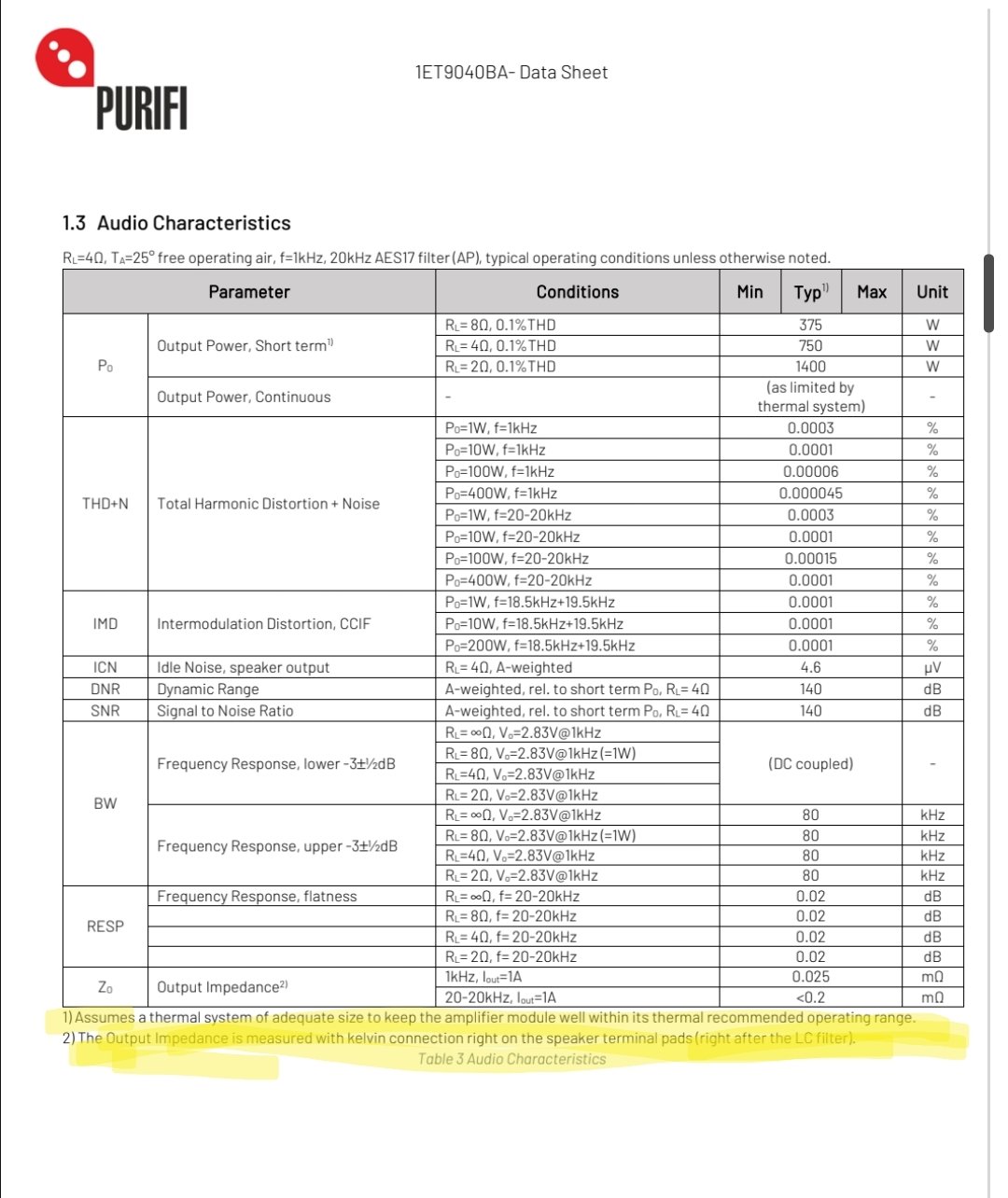
Specifically, the continuous output. Seems like the Purifi 9040 data sheet spec is a "burst"!output spec. Is that correct?
P482 specs as per the first post in the forum. Could you please confirm that this is a "continuous" output result and what "continuous" means in the test?
"
Headline specs (actual measured performance *NOT* Purifi module datasheet numbers):
Measurements taken with 21.0dB gain setting and BOTHchannels driven.
luvchampagnewrote:
Hi
I've read through the posts and the P801 spec page but was not able to find your summary as you did on the P482 first post. I probably missed it 🤦🤦.
Specifically, the continuous output. Seems like the Purifi 9040 data sheet spec is a "burst"!output spec. Is that correct?
P482 specs as per the first post in the forum. Could you please confirm that this is a "continuous" output result and what "continuous" means in the test?
"
Headline specs (actual measured performance *NOT* Purifi module datasheet numbers):
Measurements taken with 21.0dB gain setting and BOTHchannels driven.
The Purifi datasheet specs are not burst. The conditions are stated on the datasheet.
232
The primary limitation is temperature. A limitation imposed by the cooling/heatsink properties of the amp case, not any inherent limitation of the Purifi module.
Many people appear to have a misunderstanding about power ratings and ascribe unwarranted importance to "continuous" power ratings.
When applied to audio amplifiers, "continuous" power is a pretty meaningless metric. Music has a low RMS (continuous) signal level. The continuous level of power when playing music may typically be 1/5th of the peak power required. As such no amplifier will ever be run anywhere near its rated "continuous" (sine wave) power in real world use. So burst power is actually the relevant metric when judging amp power output and how loud it will play. An amp will always reach its peak power output limit first.
Maybe the rationale behind the continuous test was to expose the amplifier to the stringiest of conditions, i.e. deliver rated power and distortion across the full audio bandwidth. If it passes, then it would have no issues playing high crest factor music signals. And if it fails, then the failure would be attributed to a design issue within the amp itself.
SmartOne_2000wrote:
Maybe the rationale behind the continuous test was to expose the amplifier to the stringiest of conditions, i.e. deliver rated power and distortion across the full audio bandwidth. If it passes, then it would have no issues playing high crest factor music signals. And if it fails, then the failure would be attributed to a design issue within the amp itself.
Yes, that's the rationale. It seems reasonable on face value, but in reality it's a very flawed concept that doesn't serve the consumer interest. In fact it damages the consumer interest. It just leads to expensive over engineering for no real world benefit.
Alan Marchwrote:
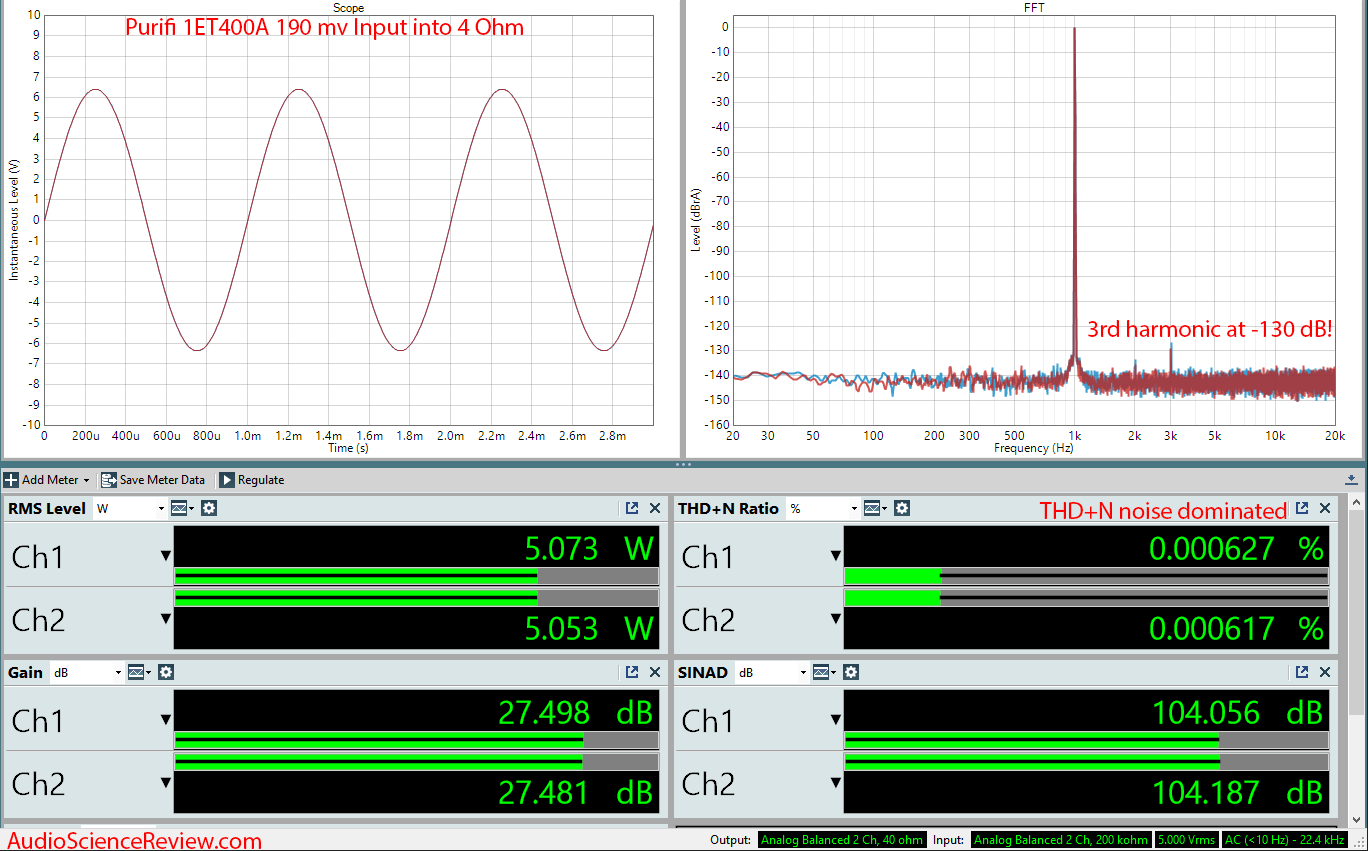
This is the 1et400 using the Purifi Eval buffer.
Unfortunately Amir uses such a low resolution FFT we can't see very far into the noise floor.
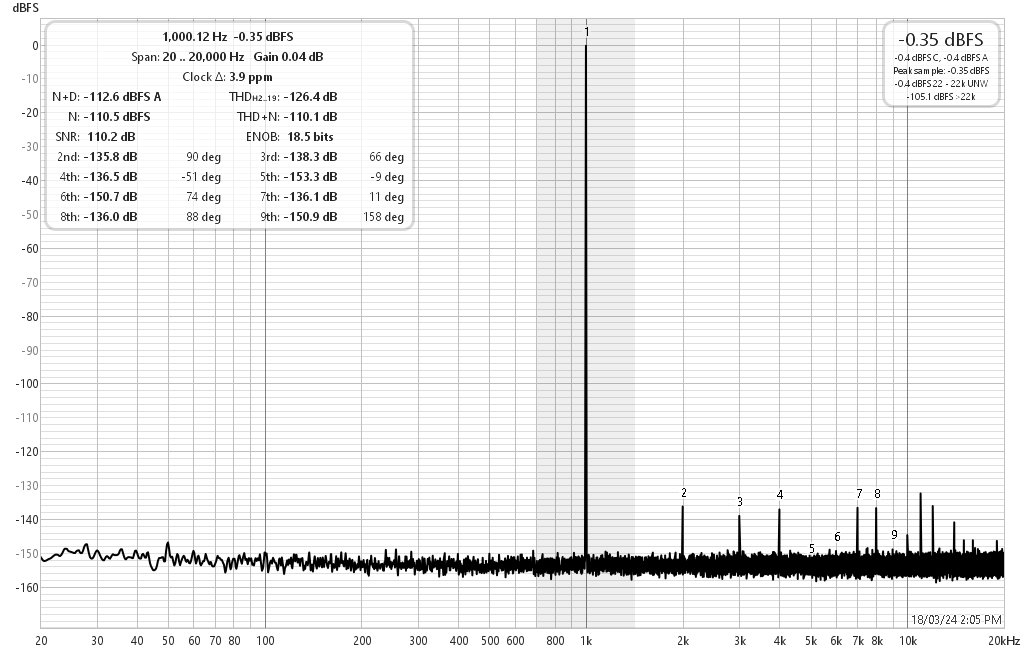
This is the P801
You can see the higher harmonics because we use an appropriate FFT resolution that allows us to look deeper into the noise floor.
Also, as I note in this post
https://forum.marchaudio.com/index.php?threads/p801-power-amp.66/
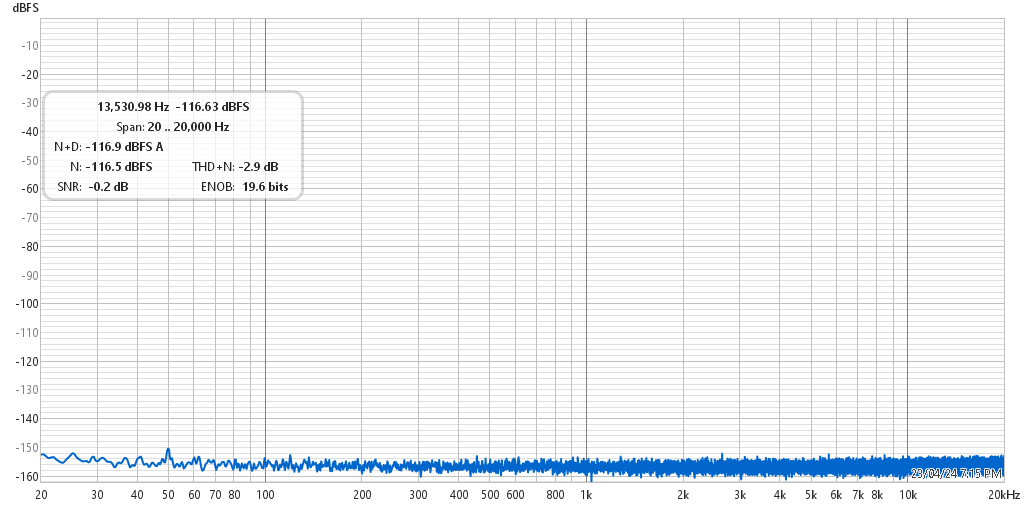
The noise floor of the amp is lower than indicated in the above plot. This is due to the inherent noise of our signal generator. It's a very good generator,, but not good enough with low enough noise to truly show the amp performance.
This is the amps true noise floor with inputs shorted. 6dB lower. True SINAD is about 116dB.
Thing I need to emphasise here is that whilst we use the opa1612, the topology is not the same as the Purifi eval board.
Gain is 23dB in our testing. If the 1et400 test was at this lower gain it would improve its SINAD by about 2.0dB.
We only have XLR inputs because RCA is fundamentally flawed. Noise currents flow in the shield. Note that XLR inputs are fully compatible with RCA sources using a correctly wired adaptor cable which mostly eliminates the issue of noise currents.
BTW, what is the loopback test noise floor of your audio analyzer, source signal de-activated? Don't need to get a plot (though it would be nice:)), just a single figure would do if it's going to be such a hassle to get it.
The noise floor of the ADC section depends on input range but from memory its below 1uV 20Hz to 20kHz. About -136dB on 5 volt range
The noise of the signal generator section is higher, above 1uV, hence we use the methods outlined earlier in the thread for more accurate THD+N calculations.
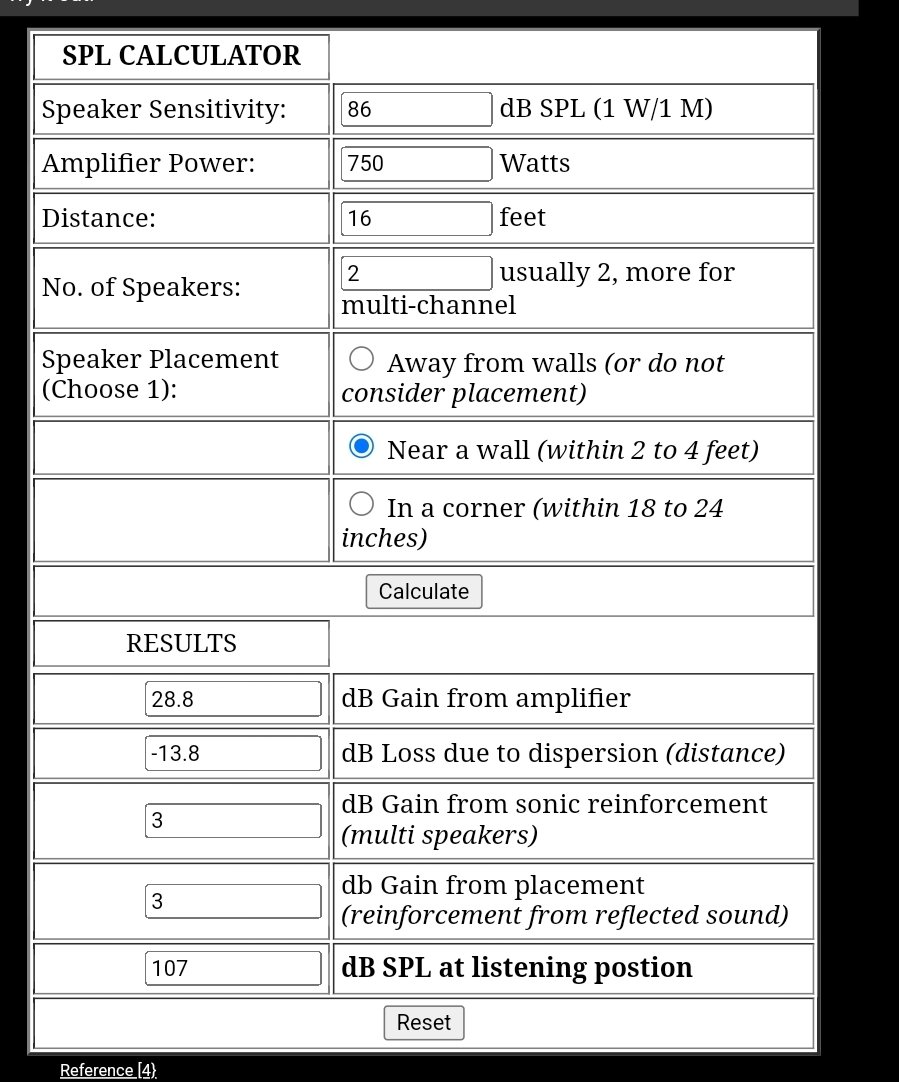
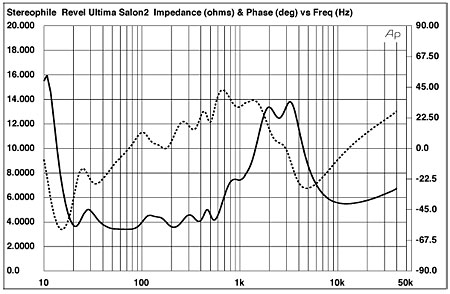
The below are rough numbers, but will give an indication of the spl level in your use case. The P801 will easily drive the salon 2 to its SPL and power handling limits. As noted the power figures are not burst.
You won't actually reach 107dB at 5m because the speaker won't handle 750 watts without compression, or without damage if used for more than short transients. So probably more like 105dB.
SmartOne_2000wrote:
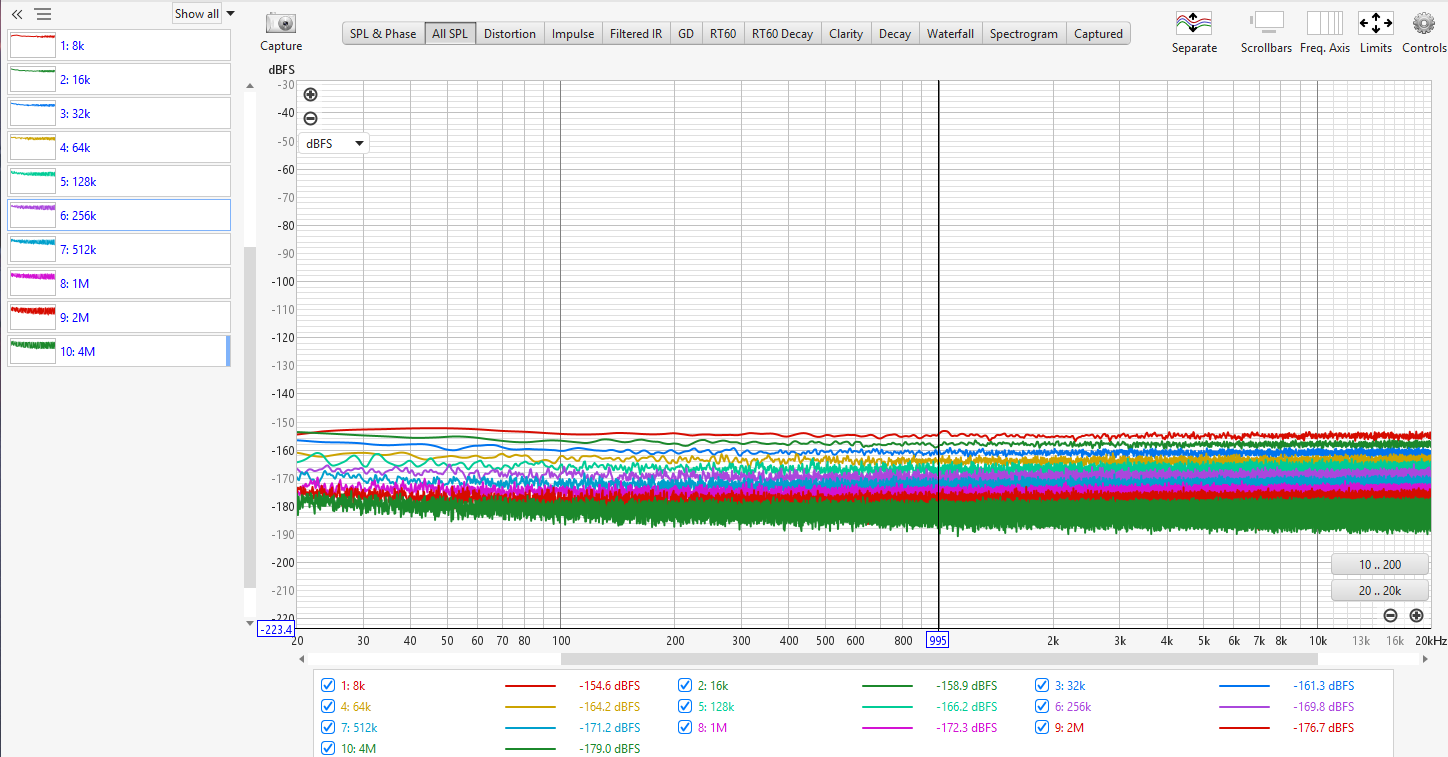
Thanks, so how would you explain the -150dB noise floor of the P801 1kHz plot you posted earlier? Was that low level achieved with averaging?
Primarily its due to FFT gain. The line you see in the plot is not the total overall noise floor as measured 20Hz to 20kHz.
A FFT splits the measured band into sections or "bins". Each bin only contains a portion of the total energy across the measurement bandwidth. The higher the resolution of the FFT or more bins, the less energy is contained in each bin. Hence the noise floor goes lower. So to look lower into the noise floor just increase resolution.
You can also use techniques such as cross correlation to reduce the noise floor. This correlates the noise between two ADC channels.
The below are rough numbers, but will give an indication of the spl level in your use case. The P801 will easily drive the salon 2 to its SPL and power handling limits. As noted the power figures are not burst.
You won't actually reach 107dB at 5m because the speaker won't handle 750 watts without compression, or without damage if used for more than short transients. So probably more like 105dB.
Thank you very much. Much better understanding of what the Purifi 9040 can do. I would have severe hearing damage even at 105db🙀🙀.
Alan Marchwrote: @SmartOne_2000 Those power sweeps you were interested in. A random unit pulled from the production line.
8 ohms 1kHz
234
8 ohms 40Hz
235
4 ohms 1kHz
236
4 ohms 40Hz
237
2 ohms 1kHz
238
2 ohms 40Hz
239
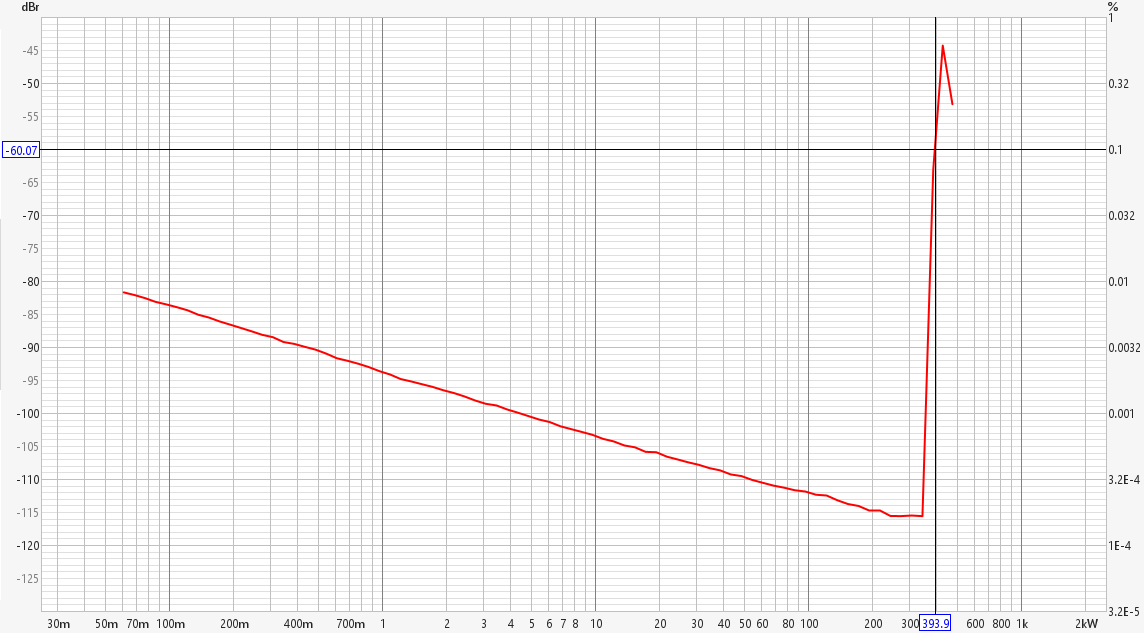
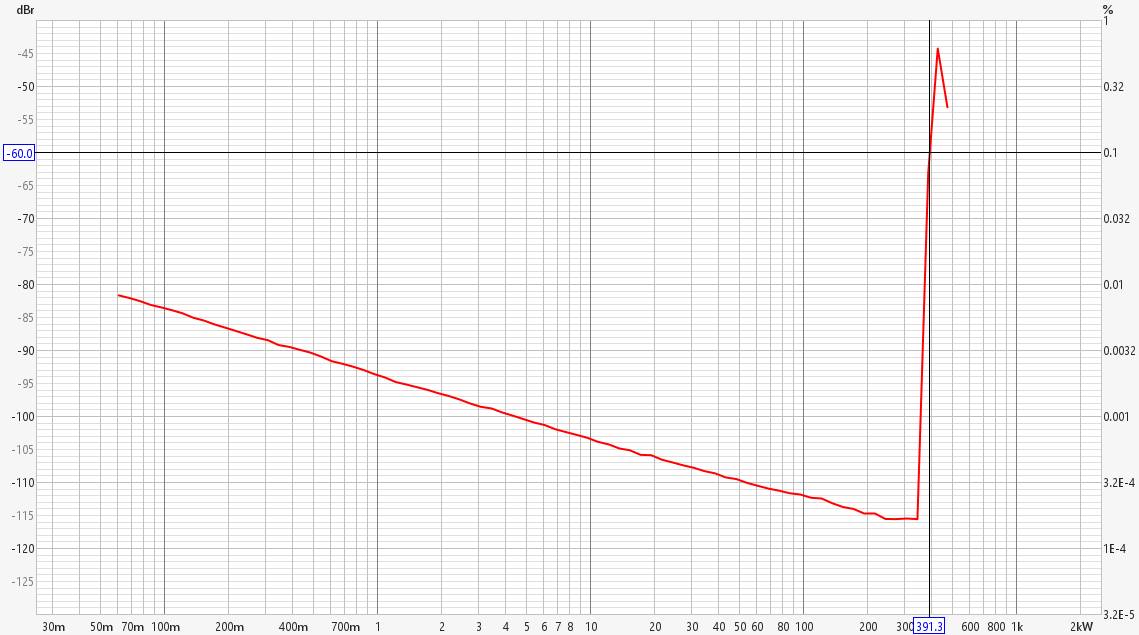
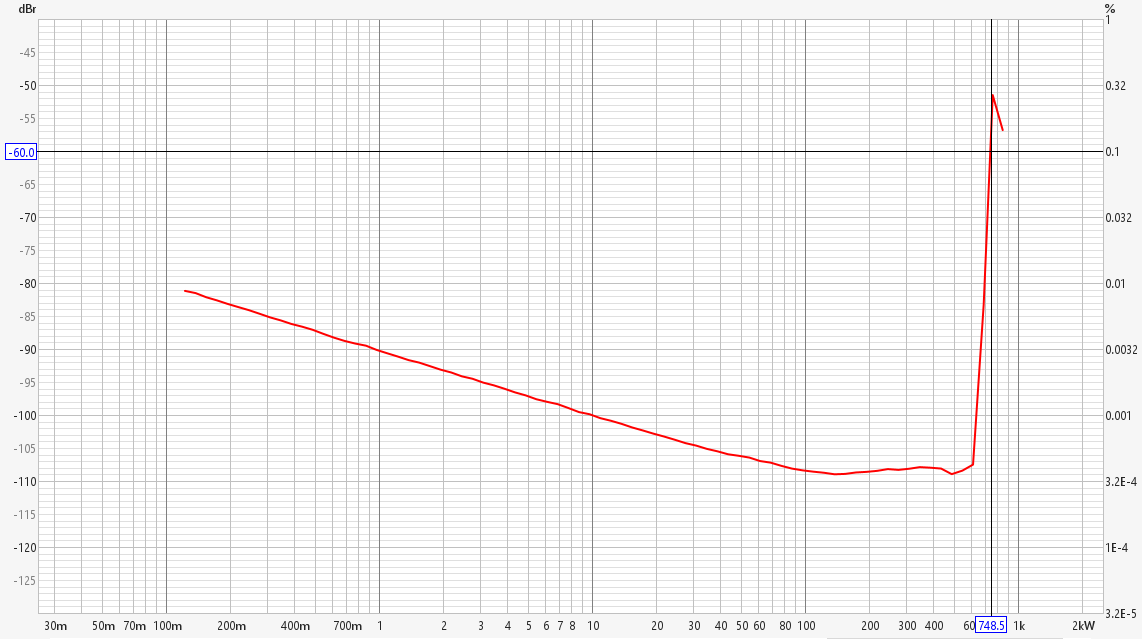
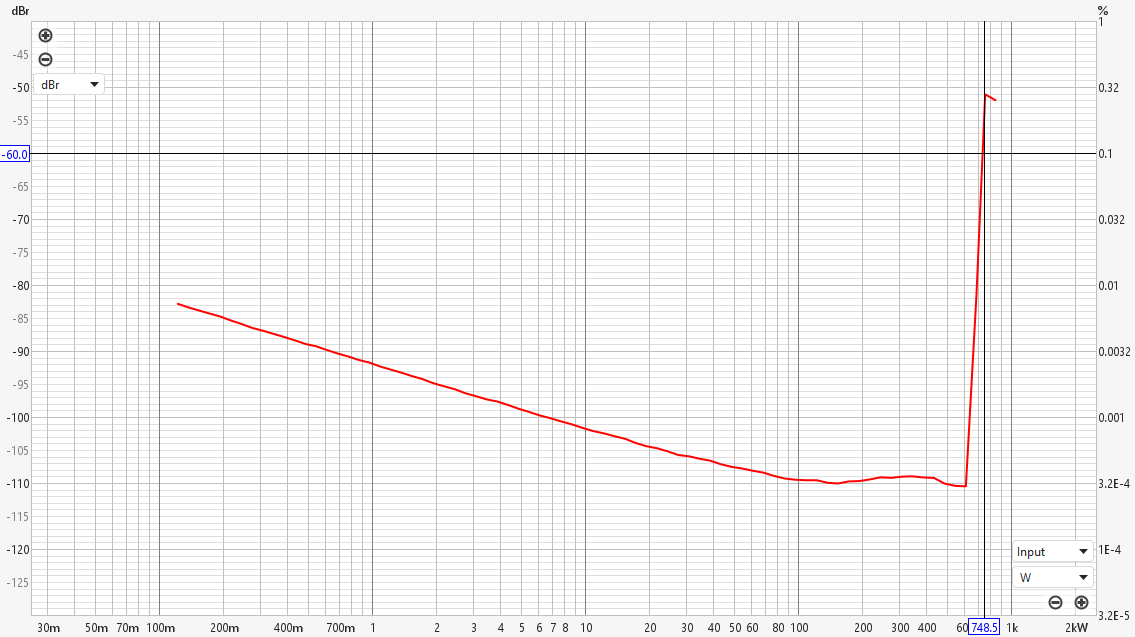
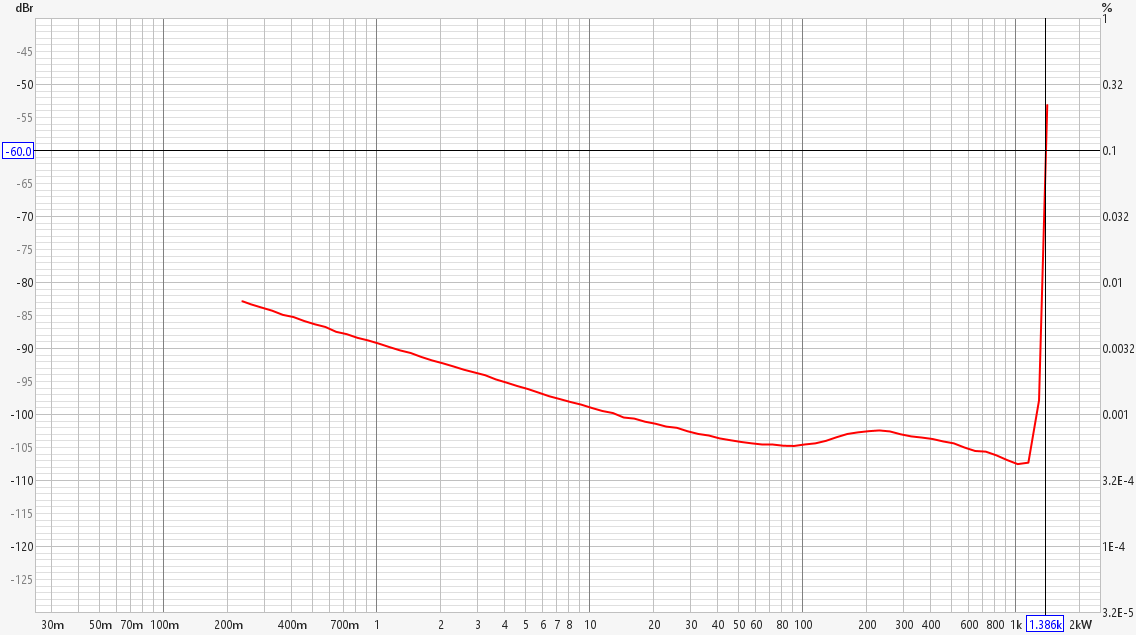
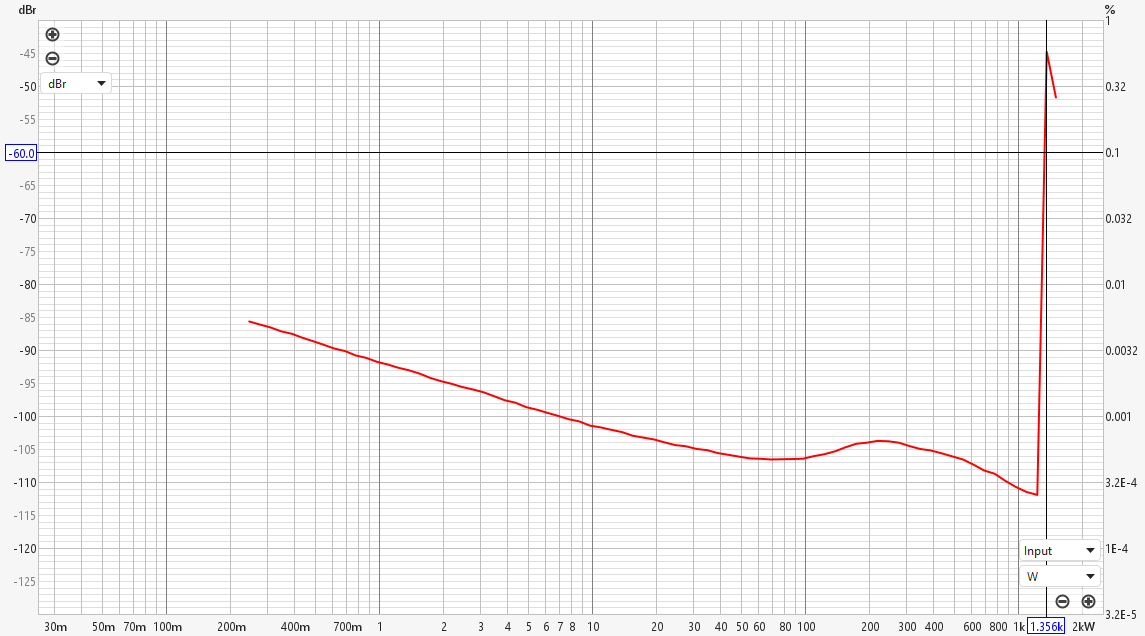
Nice ... really nice. Thank you. Care to offer an explanation for the hump beyond 100W for the 2 ohms load (not that it matters much)?
Also, the Purifi datasheets show the lowest distortion between -120dB and -130 dB for the 2, 4, and 8-ohm loads vs the -105dB to -110dB shown in the graphs above. Is that because it was tested at the lowest default gain of 14.4dB and the additional noise gain (9dB ?) from the buffer contributed to what we see above?
Finally, looking at the 4 ohm load plot at 1 kHz, its 100W THD+N is about -109dB but the published specs say -123 dB. Can you help explain the difference? If I'm mistaken, please let me know.
Thanks for volunteering these graphs. I'm quite sure they took a long time to generate and on a Sunday at that!
Alan Marchwrote:
Primarily its due to FFT gain. The line you see in the plot is not the total overall noise floor as measured 20Hz to 20kHz.
A FFT splits the measured band into sections or "bins". Each bin only contains a portion of the total energy across the measurement bandwidth. The higher the resolution of the FFT or more bins, the less energy is contained in each bin. Hence the noise floor goes lower. So to look lower into the noise floor just increase resolution.
You can also use techniques such as cross correlation to reduce the noise floor. This correlates the noise between two ADC channels.
luvchampagnewrote:
Thank you very much. Much better understanding of what the Purifi 9040 can do. I would have severe hearing damage even at 105db🙀🙀.
Revel don't publish any long term power handling figures for the salon2, so it's difficult to estimate what their power handling really is. However Im sure 750 watts will exceed your requirements.
BTW I used the 4 ohm power rating for the P801 (750 watts) as the impedance of the salon 2 is around 4 ohms throughout the frequency range where most power is required.